
10 min read
The safest approach to gluten free restaurant ordering is to do three things: choose a place that can plausibly accommodate you, tell the staff clearly that gluten makes you ill, and ask specific questions about how the food is made rather than “is this gluten-free?” The scripts below give you exact words for each step, plus the red flags that tell you to order something simpler or walk out.
No script can promise a perfect meal. Published guidance from celiac organizations is candid that restaurant food is often contaminated, so the goal is to lower your risk and to know when a kitchen is not worth the gamble. If you are newly diagnosed, practice these scripts at home first; they get easier fast.
Before you go: pick the place and the time
A good meal starts before you sit down. The Celiac Disease Foundation boils safe dining down to a few simple steps: understand the diet, research your restaurants, ask questions, be prepared not to order your first choice, and always bring a back-up snack. Our guide to finding the best gluten-free restaurants goes deeper on research; here is the short version.
- Look for the menu online first. You want a place that serves naturally gluten-free items (plain meat, chicken or fish that is not breaded or served with a floured sauce), has a gluten-free menu, or serves dishes that are easy to make without gluten, such as a hamburger without the bun or a salad without croutons.
- Call during off-hours. Phoning during a non-busy period, rather than at the dinner rush, gives the manager or chef time to talk to you properly.
- Choose your visit time carefully. One experienced celiac writer recommends off-peak dining, such as 6 pm on a Thursday, or 5 pm or 9 pm on a weekend night. The reasoning is that a slammed kitchen is more likely to make mistakes or take shortcuts, while a quieter one can take extra care with your meal.
- Be wary of pasta and pizza places. The same writer stays away from them almost entirely, though a thorough set of questions can sometimes make one workable.
- Consider going upscale if your budget allows. The same author notes that nicer restaurants are more likely to deliver a truly gluten-free meal. That is a personal rule of thumb, not a promise, so verify rather than assume.
Script: the phone call
Use questions the Celiac Disease Foundation suggests asking ahead of time:
- “Hi, I have celiac disease and I’m planning to eat with you this week. Do you have a gluten-free menu?”
- “Which dishes can be made gluten-free?”
- “Do you know what gluten is? What does it include?”
- “Has your staff completed any gluten-free training?”
Listen to the tone as much as the words. A confident, specific answer is a good sign. Hesitation, confusion or “I think so” is information too.
At the table: telling your server
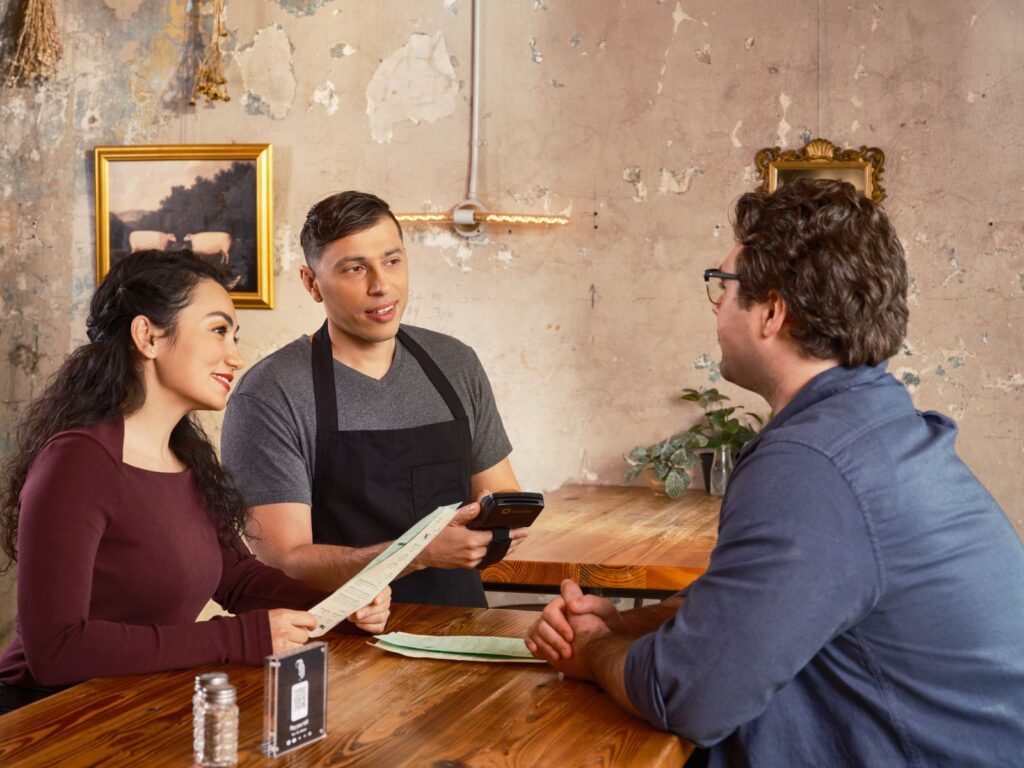
Be direct, polite and specific. The Celiac Disease Foundation advises telling the wait staff you have celiac disease and asking whether they understand what that means. If they do not, explain that you cannot eat anything with flour, bread crumbs or soy sauce or you will become very ill. If your server still does not follow, ask to speak to the manager or chef.
Script: the opener
“I have celiac disease, which means I can’t have any wheat, barley or rye. Even small amounts make me sick. Could you let the chef know, and mark my order gluten-free on the ticket?”
Script: if the server seems unsure
“I appreciate you checking. Would it be possible for me to speak with the chef or manager for a moment? I want to be sure I order something safe.”
Script: kitchen instructions
Celiac.com’s author recommends asking that your food be cooked in a separate area of the grill from where bread or other gluten items are prepared (for example, where buns are heated), and making sure the chef sees the gluten-free note on the ticket.
“Could my food be cooked on a clean part of the grill, away from where the buns are toasted, and could the chef see the gluten-free note on my ticket?”
Questions that work (and the ones that don’t)
The single most useful upgrade is replacing a yes/no question with a how-is-it-made question. A server who says “yes, it’s gluten-free” may be thinking only about ingredients and not about the shared fryer. Specific questions reveal what actually happens in the kitchen.
| Instead of asking… | Ask this |
|---|---|
| “Are the fries gluten-free?” | “Do you fry anything else, like breaded items, in the same fryer as the fries? Are the fries coated in flour?” |
| “Is the pizza crust gluten-free?” | “Is there a dedicated area in the oven? Are gluten-free toppings kept separate, or is the prep area shared with regular pizzas?” |
| “Is the pasta gluten-free?” | “Is the gluten-free pasta cooked in separate water from the wheat pasta?” |
| “Is the butter sauce gluten-free?” | “Is the sauce thickened with flour or with corn starch?” |
| “Is the soup gluten-free?” | “Do you make the stock in-house or buy it pre-made? Does the soup contain flour or barley?” |
| “Is the salad OK?” | “Are there croutons, wontons or crispy noodles on it? Does the dressing contain wheat or flour?” |
Celiac.com’s author explains why the stock question matters: purchased, pre-made stock is more likely to contain gluten than stock made in-house, where the chef knows exactly what went into it. These questions require a little cooking knowledge, but even if you never cook yourself, learning them is worth it.
More questions from the Celiac Disease Foundation’s list
- Has the food been marinated in any sauce?
- Does the sauce contain flour, soy sauce or teriyaki sauce?
- Has the food been dusted with flour before being sautéed or fried?
- Are artificial bacon bits or other meat substitutes used on potato skins and salads?
- Are your mashed potatoes from a mix or from real potatoes?
- Do you use imitation crabmeat?
Order smart: simple dishes win
Even with great questions, simpler food means fewer places for gluten to hide. Both the Celiac Disease Foundation and Celiac.com’s author point the same way: choose simple dishes without a coating or sauce, or ones that can be made without a sauce.
- Safer starting points: something grilled (not marinated), with no sauce unless the sauce is confirmed gluten-free, plus plain sides. A burger without the bun with a baked potato is a safer bet than fried chicken at a restaurant with no gluten-free fried option.
- Be ready to compromise. Expect that your first choice may not be possible, and have a second and third in mind.
- Don’t assume anything. The Celiac Disease Foundation gives two examples of surprises: omelets may contain pancake batter to make them fluffier, and baked potatoes may be coated in flour to crisp the skin.
- Watch for a hidden marinade. Celiac.com’s author describes a steak frites dish that wasn’t marked gluten-free even though the restaurant handled gluten-free fried items well. Asking why revealed that the steak was marinated in soy sauce that contained gluten. Asking “why not?” about a dish you’d expect to be safe can uncover this kind of detail. For more of these surprises, see our list of hidden sources of gluten.
Script: when you’re ready to order
“I’d like the grilled salmon with no marinade, no sauce and a plain baked potato. Can you confirm the potato isn’t rubbed with flour, and that the fish is cooked on a clean surface?”
Red flags: when to change your order or leave
Certain responses and situations should make you pause. None of them proves a meal is unsafe, but together they tell you the kitchen may not be able to protect you.
Want the tool that scans this stuff for you?


- The server says “gluten-free” with no follow-up. If you ask a how-is-it-made question and they can’t answer or don’t check with the kitchen, treat the dish as unconfirmed.
- Nobody can say what gluten is. The Celiac Disease Foundation lists this as a question to ask for a reason. If staff and management can’t explain it, consider another restaurant.
- The shared fryer. If fries or other items share oil with breaded products, skip them.
- Shared pasta water or shared pizza prep areas with no dedicated gluten-free process.
- Pre-made sauces, stocks and marinades that no one can verify.
- The busiest hours. A kitchen under pressure is where shortcuts and mistakes are most likely.
- Pushback or irritation. If a manager treats your questions as an inconvenience rather than a safety matter, that is a sign to eat elsewhere.
Script: backing out gracefully
“Thank you for checking for me. Since I can’t be sure the kitchen can keep this safe, I think I’ll pass tonight. I appreciate your help.”
Leaving is a legitimate outcome, which is exactly why the back-up snack matters. If you need to confirm what goes into a packaged item or condiment on the spot, our 30-second food-checking guide can help, and it is worth reading about how gluten scanners work and how accurate they are before relying on any device at the table.
After a good meal: build the relationship
Once a restaurant gets your order right, keep going back. Celiac.com’s author describes how, after a few safe visits, a local restaurant learned their needs and kept gluten-free items on the menu. Thank the staff, tip well, and tell the manager what they did right. A restaurant that knows you is often the most reliable one you’ll find. This also makes occasions easier, and our tips for a gluten-free date night build on exactly this approach.
Don’t forget drinks. Beer, for example, is a common stumbling block, so check whether beer is gluten-free and look at our pages on wine and hard cider before you order a round.
Frequently asked questions
Are corn tortillas always gluten-free at restaurants?
Not necessarily. Corn itself is naturally gluten-free, but that doesn’t cover how a restaurant handles the tortillas. Ask whether they are made from corn only, whether they’re warmed on the same surface as flour tortillas, and whether anything is fried in shared oil. As the Celiac Disease Foundation advises, don’t assume anything is gluten-free.
How do I know if a restaurant is truly safe for celiac disease, not just gluten-sensitive diners?
Look for signs that staff understand cross-contact rather than just ingredients: dedicated fryers, separate prep areas and cooking water, and training on gluten-free handling. Ask the questions in this article and judge the quality of the answers. Even then, Celiac.com notes that studies have shown restaurant food is often contaminated, so no restaurant can be assumed perfectly safe.
Can gluten-free restaurant meals work for corporate catering or group events?
They can, with advance planning. Contact the restaurant or caterer ahead of time during a non-busy period, share the same questions you’d use for a regular meal, and ask who will be handling your portion. Our published sources don’t cover catering specifically, so confirm the details directly with the provider and bring a back-up snack.
What gluten-free restaurant options provide the most sustained energy without an afternoon crash?
The research we draw on doesn’t address energy levels, so we can’t make claims there. What it does support is choosing simple, unsauced dishes such as grilled protein with plain sides, which are also among the safer gluten-free picks. For personalized nutrition advice, a registered dietitian is the right person to ask.
Sources
- How to Order Gluten-Free Food in a Restaurant – Celiac.com
- Dining and Social Eating | Celiac Disease Foundation
Ordering gluten-free at a restaurant is a skill that improves with practice, and these scripts are a starting point to adapt to your own voice. If you want help checking ingredients on the go, the Gluten Safety app can be a handy companion: get the Gluten Safety app.
This article is for general information only and is not medical advice. If you think you have celiac disease or a gluten-related condition, talk to a doctor or registered dietitian before changing your diet.